
Breeze Life Fishing
Stay Breezy Family
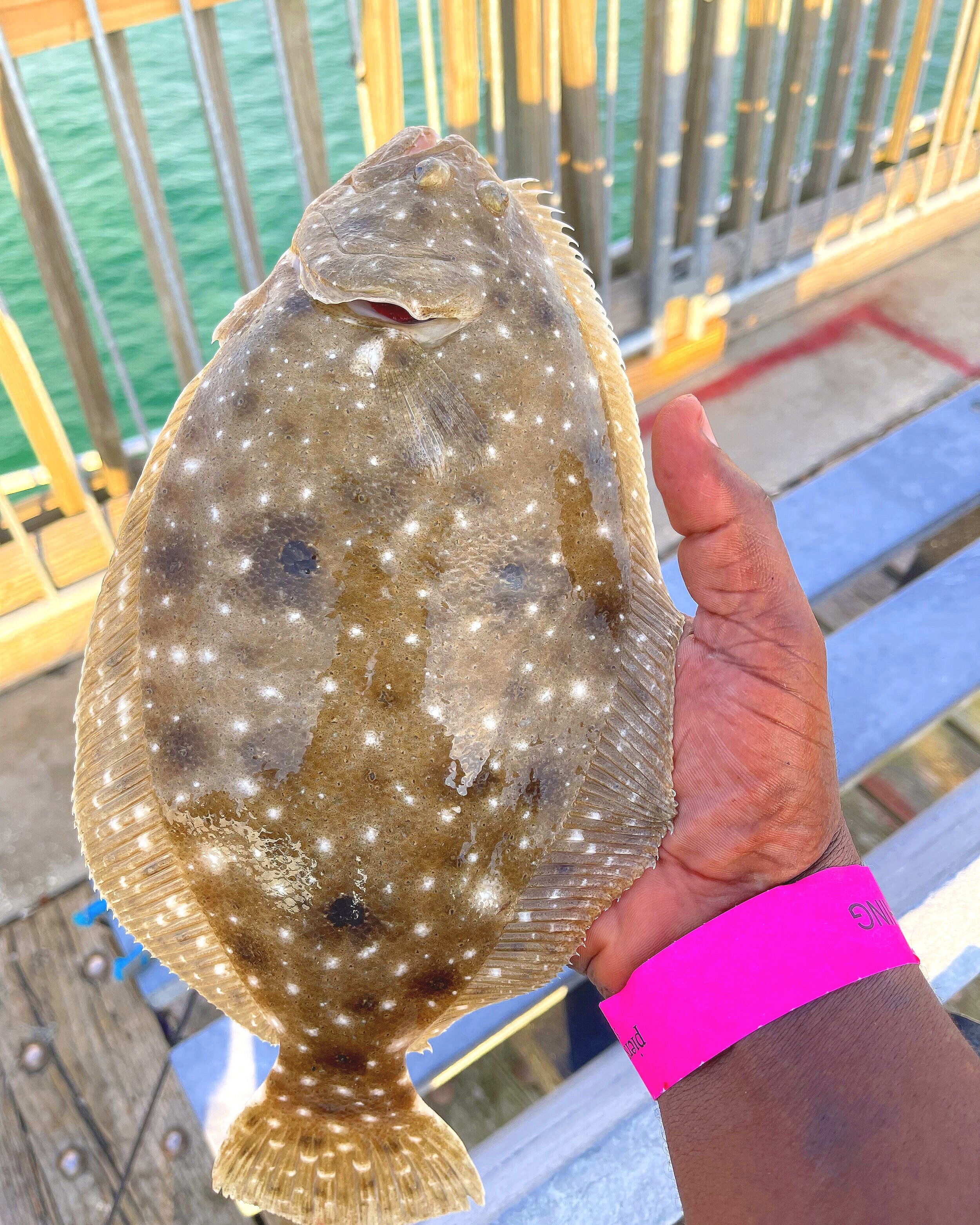
Southern Flounder
Appearance
Bottom-oriented flatfish with both eyes on the left side
Numerous spots and blotches on body with three prominent dark, eyelike spots forming a triangle-shape (one spot on lateral line, one above and one below)
Strong canine-like teeth
Wedge-shaped tail, its tip in the middle
Similar Species: Southern flounder, P. lethostigma (may have 5 or more spots but they are not eyelike); summer flounder, P. dentatus (have 5 or more ocellated or eyelike spots on the body)
Size: Common to 14 inches (2 pounds)
Habitat
Inshore on sandy or mud bottoms, often ranging into tidal creeks. Occasionally caught on nearshore rocky reefs.
Behavior
Right eye migrates over to left side early in life.
A bottom-dweller thought to spawn offshore.
Feeds on crustaceans and small fishes.
Ability to camouflage by changing colors to match their surrounding habitat and avoid predators.
Additional Information
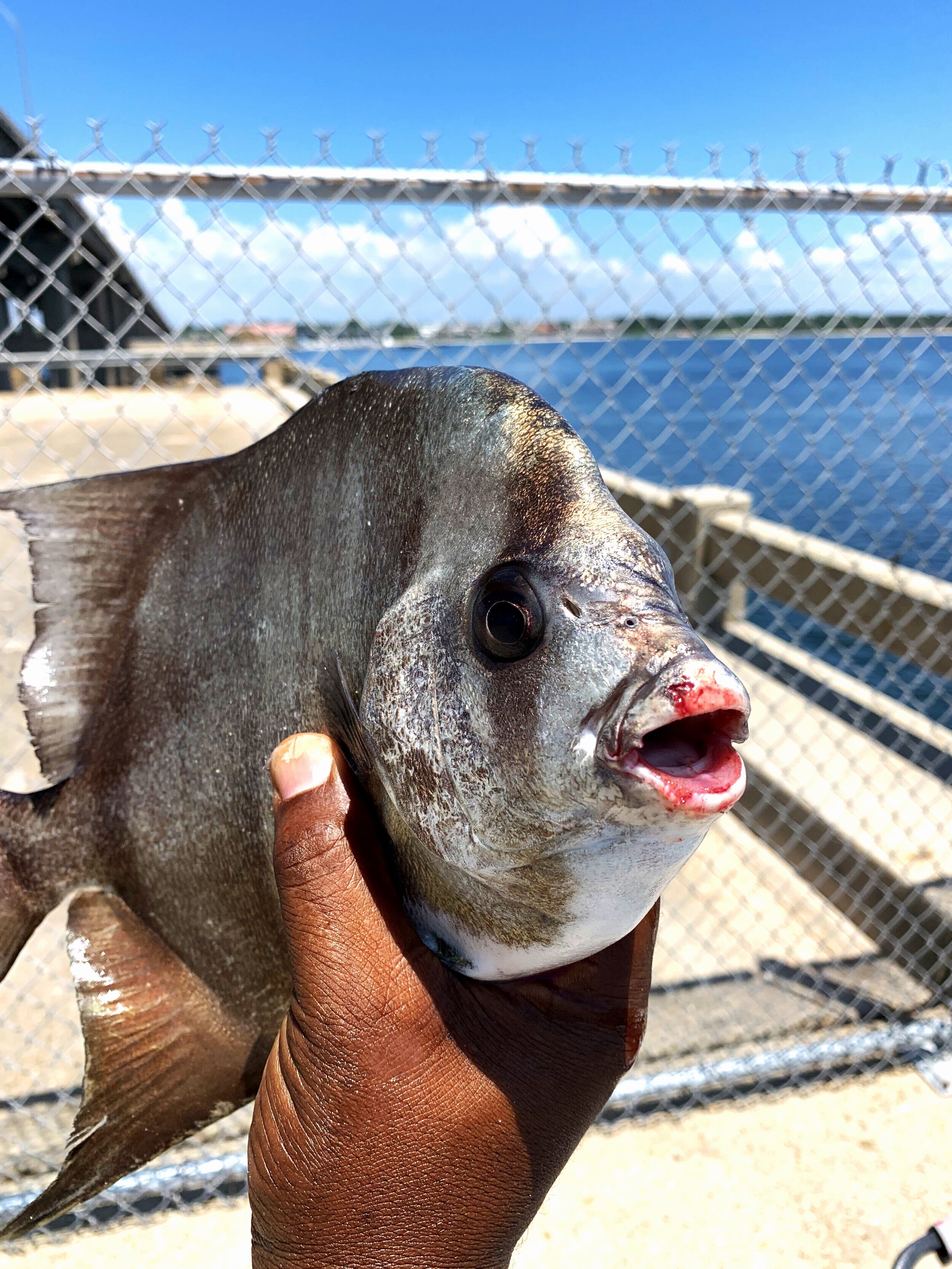
Atlantic Spade fish
Appearance
Silver color with 4 to 6 black vertical bars on each side (may fade in larger fish)
Deep, compressed body
First and second dorsal fins separated
Tail-shape concave
Second dorsal fin and anal fin elongated
Young are entirely dark brown or black in color
Similar Species: No close resemblance, but frequently called angelfish by mistake
Size: Up to 36 inches (20 pounds); common to 2 pounds
Habitat
Inshore, nearshore, over seagrass beds and around structure
Behavior
Spawn in spring and summer; travel in large schools; small juveniles may drift on their sides to mimic floating debris; feed on crustaceans and other invertebrates
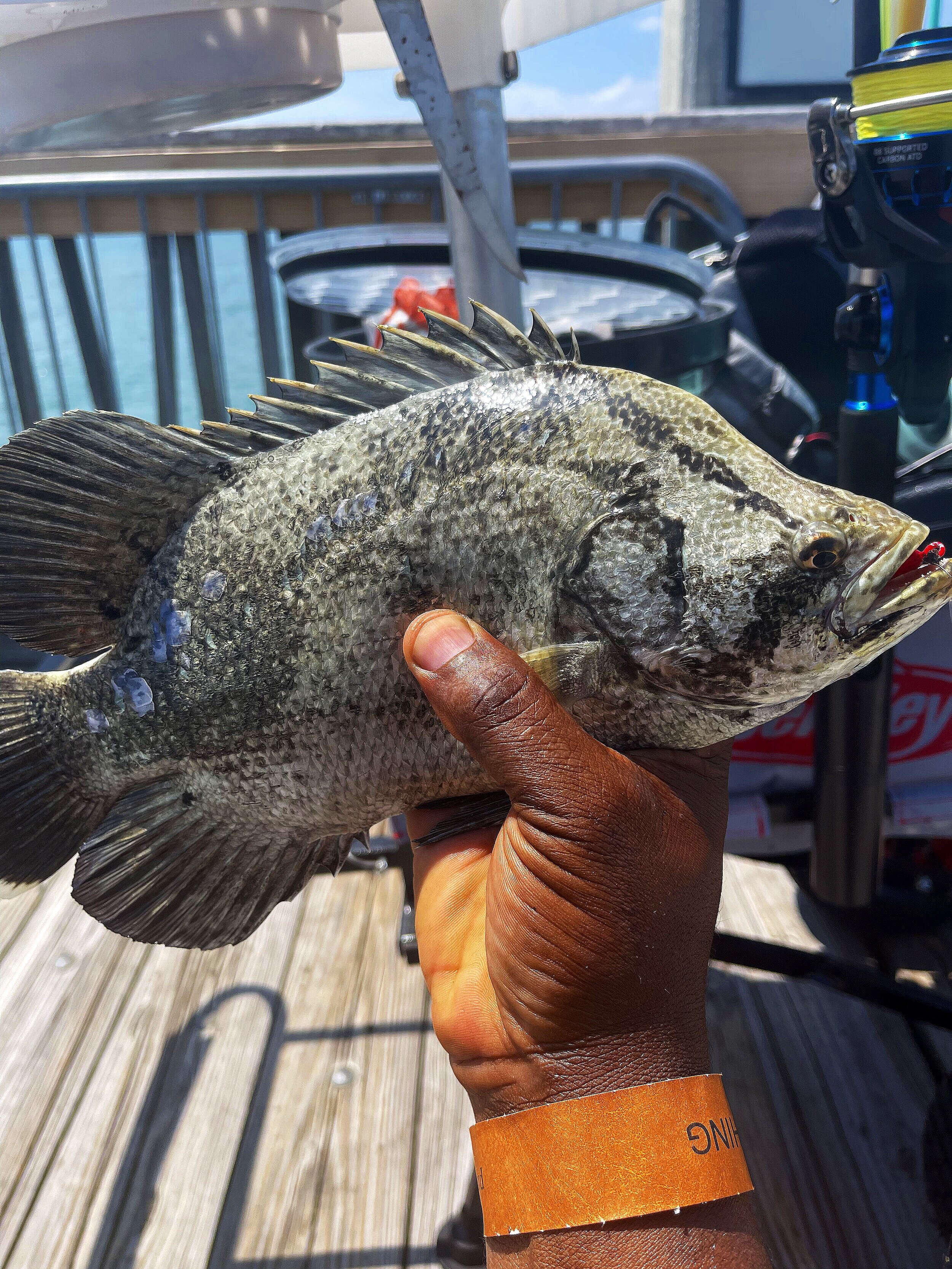
Triple Tail
Triple Tail
Upper profile concave at nape
Elongated dorsal and anal fins give the illusion of three tails
Head and body typically has blotches of tan to yellow or dark brown
Edge of preopercle (cheek) very serrated
Size: Up to 42 inches
Habitat
Found in bays and estuaries to offshore waters. Associate strongly with floating objects such as buoys or channel markers.
Behavior
Found in Florida primarily during spring, summer and fall.
Fishing Tips and Facts: Often found near structure and when hooked will seek to escape by heading hard for shelter.
Recreational Regulations it is, the way you tell your story online can make all the difference.
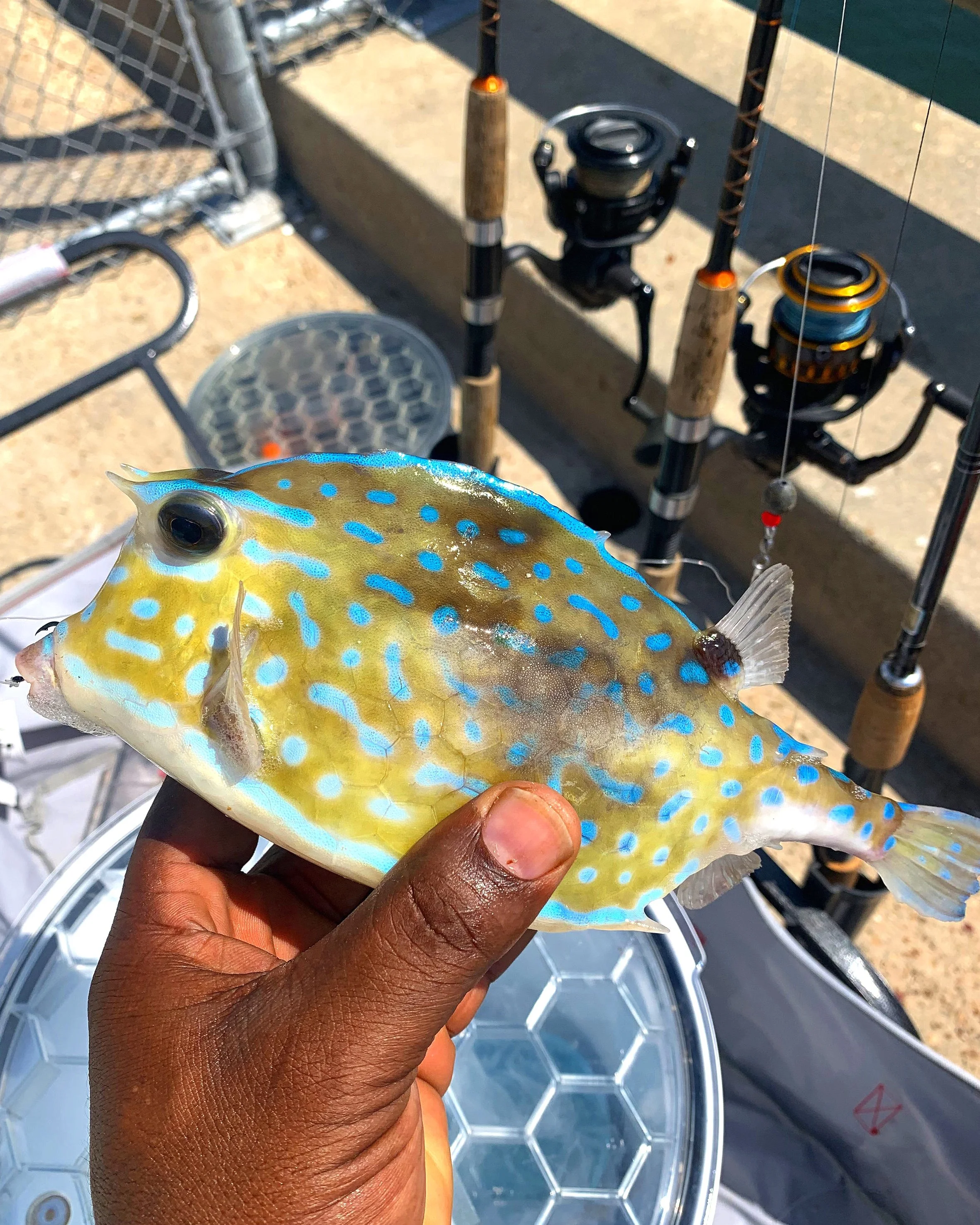
Crawled Cowfish, Acanthostracion quadricornis
Fish caught off the Anglins Pier, Lauderdale-By-The-Sea, Florida, March 2015. Length: 19 cm (7.5 inches). Catch, photograph and identification courtesy of George Brinkman, Guelph, Ontario, Canada. The Scrawled Cowfish, Acanthostracion quadricornis, is a member of the Boxfish or Ostry, and is known in Mexico as torito cornudo. Globally, there are four species in the genus Acanthostracion, of which two are found in Mexican waters, both in the Atlantic Ocean.
The Scrawled Cowfish is a very colorful subtropical fish that has a deep body that is covered with hexagonally-shaped plates fused together to form a shell or true carapace. They have an overall gray-brown to yellow-green coloration with numerous dark to bright blue irregular bars and spots. They also have dark spots and blotches on their body and 3 or 4 parallel blue stripes on each cheek. Their head has a small terminal mouth with fleshy lips and less than 15 conical teeth on each jaw. They have a pair of spines on their head that project in front of the eyes and a pair on the rear corner of their carapace. Their anal has 10 rays; their caudal fin is rounded; and, their dorsal fin has 10 rays. They do not have a dorsal fin spines or pelvic fins. They have 13 to 17 gill rakers.
The Scrawled Cowfish is found in shallow water within grass beds and coral reef areas at depths up to 79 m (260 feet). They reach a maximum of 55 cm (22 inches) in length, but are normally in the 20 cm (7.9 inches) to 38 cm (15 inches) range. They consume sessile invertebrates such as anemones, crabs, crustaceans, gorgonians, sponges, tunicates, and marine vegetation. In turn they are fairly immune to predation by larger fish due to their protective external shell. They can also remain motionless for long periods of time relying on camouflage for defense. They are slow swimmers and only able to generate propulsion via their anal, dorsal, and pectoral fins. They reproduce via pelagic eggs and pelagic larvae.
The Scrawled Cowfish is a resident of all Mexican waters of the Atlantic Ocean including the Gulf of Mexico and the Caribbean.
The Scrawled Cowfish is most likely confused with the Honeycomb Cowfish, Acanthostracion polygonius https://mexican-fish.com/scrawled-cowfish/